功夫2
多举措织密汛期安全“防护网”_我的网站

A | ■ 史佳文 刘芷帆 赵姝蘅 记者 王雪娇
为深入贯彻落实省、市、区关于防汛工作相关要求部署,积极应对强降雨天气,汛期来临之际,龙港区各部门积极行动,切实履行工作责任,确保全区安全度汛。

B |
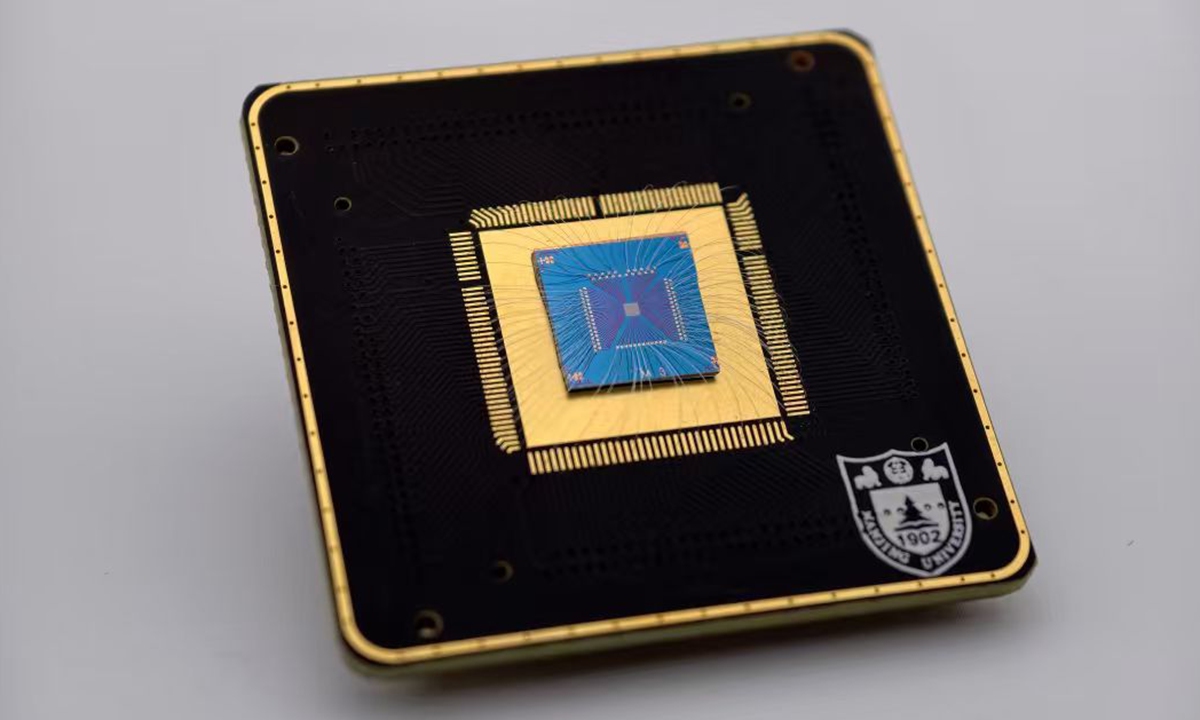
The new ultra-low-power intelligent vision sensor chip "LightTok" developed by a research team from Nanjing University. Photo: from Science and Technology Daily
A Chinese research team from Nanjing University has developed a new ultra-low-power intelligent vision sensor chip, dubbed "LightTok," that can convert light signals into tokens within the sensor, significantly reducing the high energy consumption caused by frequent transfers of massive amounts of redundant data, the principal investigator told the Global Times.
According to a release from the Institute of Brain-Inspired Intelligence of Nanjing University, tokens generated by the LightTok chip can be directly fed into a Transformer encoder for image recognition.
"Our design idea was to move token generation onto the sensor itself, allowing the chip to directly produce tokens that AI models can process once light reaches the sensor," Miao Feng, director of the Institute of Brain-Inspired Intelligence at Nanjing University, told the Global Times on Thursday. "These tokens contain complete image information."
Physical AI refers to intelligent systems capable of autonomously perceiving, reasoning, acting and receiving feedback in the real world, representing a key pathway for AI to move from the digital realm into the physical world. Vision-based physical AI systems powered by large AI models need to convert visual information from real-world environments into tokens that can be processed by AI models before feeding these tokens into Transformers for subsequent tasks.
In traditional visual perception pipelines, light signals must go through multiple stages, including image sensing, analog-to-digital conversion, data buffering and transfer, digital image patching and embedding, before being transformed into tokens that AI models can process. The frequent transfer of massive amounts of redundant data has resulted in high energy consumption at the edge, according to a report by Science and Technology Daily.
The LightTok chip directly addresses a key challenge in physical AI hardware: how to efficiently acquire and tokenize visual information from the physical world with low energy consumption, Miao said.
The LightTok chip consists of a photosensitive memory array and peripheral circuits. The team built the array based on single-layer molybdenum disulfide (MoS₂) floating-gate phototransistors, with each pixel capable of sensing light, storing information and performing analog computing. By processing optical information directly within the chip, the device can convert captured visual signals into tokens for AI models, according to the research team.
The current LightTok prototype has a resolution of 32×32 pixels, or 1,024 photosensitive pixels, which is still smaller than that of smartphone cameras and industrial imaging systems. However, Miao said the technology is compatible with CMOS manufacturing processes and can be scaled up. With wafer-level growth of molybdenum disulfide materials, the chip could potentially achieve a scale comparable to existing imaging devices.
Miao said the chip also draws inspiration from the information-processing mechanism of human vision. Similar to how the retina extracts key visual information before transmitting it to the brain, the chip also aims to process visual information at an early stage.
The research was conducted in collaboration with another research team from the National University of Singapore. The findings were published on Wednesday in Nature Sensors, an internationally renowned journal in the field of sensing technology, according to the release.
Potential applications for LightTok include drone systems, autonomous remote sensing and small-scale embodied AI systems, Miao said. In these scenarios, devices need to continuously detect, understand and track targets, generating massive amounts of visual data. By reducing the energy required for visual processing, the technology could extend the operating time of drones, satellites and small robots with limited power supplies, the expert said.
。
开展巡堤查险
7月25日,区农业农村局开展巡堤查险工作,确保险情早发现、早处置,保障行洪安全。
在五里河流域玉皇街道狗屯段,区农业农村局主要负责人及工作人员正在查看河道淤堵、堤坡牢固等情况,并对易发生坍塌的重点部位、薄弱环节开展全面排查,将险情隐患消灭在萌芽状态。
据了解,区农业农村局强化风险意识、底线思维,立足“防大汛、抢大险、救大灾”,制定防汛应急预案,加大隐患排查力度,严格落实值班值守和领导带班制度,全员保证24小时通信畅通,确保随时应对各类突发状况,全力保障人民群众生命财产安全。
目前,龙港区已进入“七下八上”主汛期,近期强降雨频繁,为确保河道堤防安全,区农业农村局将严格按照区委、区政府要求,全面开展巡堤查险工作,对重点部位进行拉网式排查,确保不留死角,发现隐患立即处理,全力以赴保障人民群众生命财产安全,确保安全度汛。
督导景区防汛
连日来,市区出现持续降雨天气。区文广局闻“汛”而动,积极督导各景区防汛工作,切实履行工作责任,护航景区安全度汛。
7月25日,区文广局工作人员来到龙湾海滨、葫芦古镇,详细了解景区防汛应急预案制定、安全隐患排查治理、应急物资储备、防溺水工作、值班值守等情况,同时,还认真查看景区内河道、步道等情况,对可能存在的安全隐患提醒景区做好防控措施。各景区负责人表示,将进一步落实防汛责任,科学设置警示标志,加强值班值守和巡查检查,为游客和景区工作人员生命财产安全保驾护航。
区文广局将继续做好文化旅游行业防汛防灾各项工作,制定防汛应急预案,全面推动、促进行业的汛期安全防范深入扎实开展,确保行业安全稳定。
科学制定预案
进入汛期以来,区环卫园林处细化防汛措施、明确任务分工,制定科学可行的防汛预案,从早、从严、从实做好各项防汛准备工作,筑牢防汛“安全墙”。
区环卫园林处以“防”为要,做好物资筹备工作,建立雨前预防、雨中应对、雨后排涝的工作机制,组建防台防汛作业应急小组,配齐照明工具、雨衣、雨靴、编织袋等物资,确保防汛应急抢险工作有效落实,并全面增强环卫工人安全作业意识,根据天气变化灵活调整作业方式,提前做好雨后环境整治、淤泥落叶清扫等准备工作。

C |
同时,以“守”筑本,落实24小时值班制度,提升防范能力,对辖区重要路段、重点区域全面细致开展安全隐患排查,加大防汛期间下水口断裂树枝、落叶的保洁力度,确保雨水管网排水通畅。
区环卫园林处密切关注气象部门的预报预警,科学研判防汛形势,持续抓好辖区汛期隐患排查和防汛应急处置,多措并举保安全,抓实抓细防汛工作,确保平稳度汛。

D |
Current article:http://www.feizengbubaipeirangnalouchuo.sbs/list_odu/945ch.html
Published on:04:18:20


