
步步惊心:丽美国互动健身平台Peloton两位联合创始人退出_首席_该公司_我的网站
A | 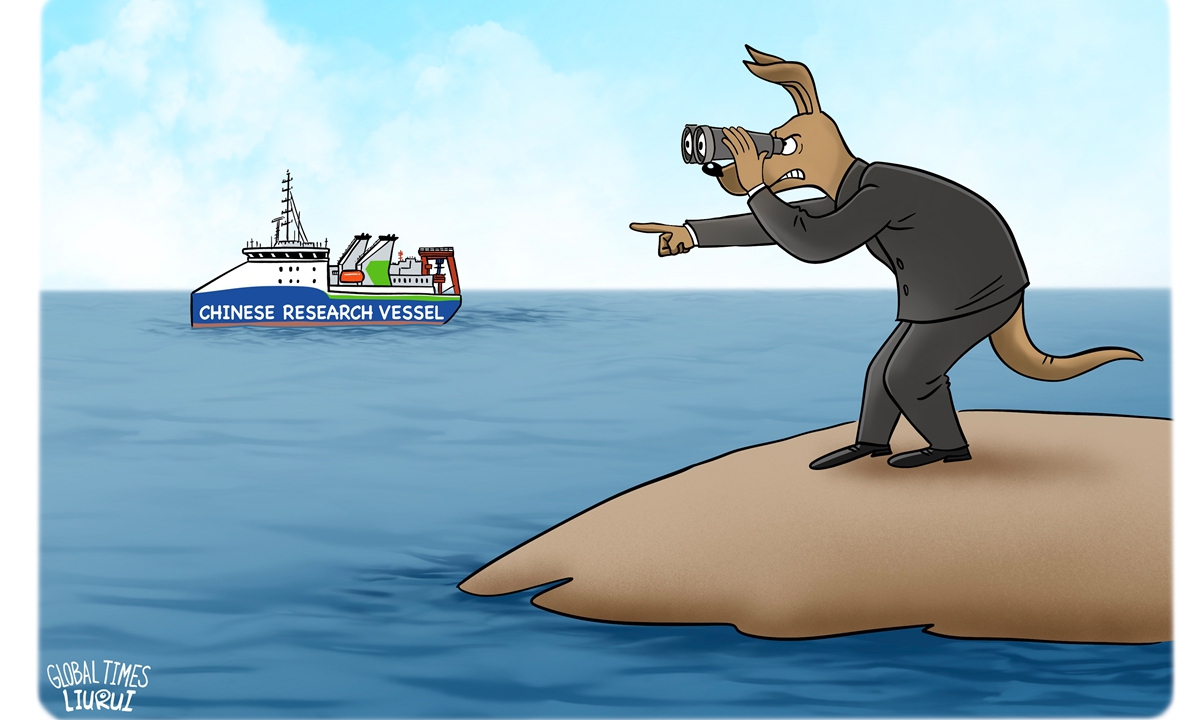 Published by the National Security College at the Australian National University (ANU), the paper claimed recent damage to cables in the Baltic Sea and around China's Taiwan region suggests "state actors are now actively probing and testing cable infrastructure in peacetime as part of broader hybrid warfare strategies" to rapidly degrade connectivity at the outset of a conflict, The Australian reported. The paper claimed 16 privately owned subsea cables that carry 99 percent of Australia's internet traffic are a "high priority target" for Australia's adversaries that could be severed in a conflict, threatening the nation's economy and social fabric, according to The Australian. The report singled out China and Russia for blame, saying that there have been multiple apparent attacks on submarine cables in recent years in European waters as well as near China's Taiwan region, suspected to be linked to Russia and China, the Straits Times reported. However, the report cites a 2025 voyage by Chinese research vessel Tan Suo Yi Hao along Australia's western and southern coastlines as evidence to back its claim that "potential adversaries are actively gathering information about Australia's cable infrastructure." This report, relying on the routine scientific operations of a Chinese research vessel in 2025 to level allegations of offensive actions against China, and employing ambiguous terminology such as "suspected" and "potential," demonstrates Australia's evidentiary leap, Chen Hong, director of the Australian Studies Center of East China Normal University, told the Global Times on Monday. This erroneous claim was refuted by the Chinese Foreign Ministry at the time. Chinese Foreign Ministry spokesperson Guo Jiakun said on March 31, 2025 that China carries out normal activities at sea in accordance with international law, including UNCLOS. "We hope Australia will have a right understanding of this and stop the groundless suspicion and speculations," Guo added. This is not the first time certain Australian politicians has leveled baseless accusations of China intending to sabotage its undersea cables. Back in May, Defense Minister Richard Marles claimed during the Shangri-La Dialogue that China ought to boost transparency around its maritime operations. He also asserted that a surge in damage to subsea cables had transformed the seabed into a "battlefield," per The Australian. Chen said Australian side's scaremongering is tied to its predictive threat‑perception framework forged in recent years. This framework designates China and other countries as strategic competitors in advance, subsequently forces routine scientific activities into a confrontational framework, Chen said. Apart from unfounded allegations against China, the paper claims Australia's defense military "must incorporate the defense of submarine cable infrastructure into its operational planning," according to The Australian. It added the government should also consider up¬grading an auxiliary ship operated by the navy, ADV Guidance, to enable it to repair damaged cables. The vast majority of submarine cable damages are caused by accidental factors such as fishing operations and vessel anchoring, rather than deliberate sabotage. For suspected cases of intentional damage, independent technical investigation bodies should be established, and the principle of "investigate first, characterize later" should be strictly applied, so as to prevent ordinary maritime accidents from escalating into diplomatic conflicts, Chen said. The core problem of Australian side's submarine cable security lies entirely with itself. Instead of addressing its own infrastructure shortcomings and improving its domestic protection and maintenance systems, the Australian side has chosen to continually exaggerate external threats and stoke bloc confrontation, the expert added. Chen said that by fabricating alleged Chinese threats, Australian side seeks to "rationalize" its military spending increases and underwater force expansion. The submarine digital infrastructure originally meant to serve global development has been labeled along us versus them lines, and this constitutes the biggest hidden danger, he added. 。 原标题:美国互动健身平台Peloton两位联合创始人退出9月13日,美国科技博客The Verge报道,美国互动健身平台Peloton当地时间周一宣布,联合创始人兼执行主席John Foley已决定退出董事会,首席独立董事Karen Boone已被选为董事会主席。此外,该公司还宣布,联合创始人兼首席法务官Hisao Kushi已经辞职,由Uber的首席副总法律顾问Tammy Albarrán接任。首席商务官Kevin Cornils也将离开。这也意味着这家互联网健身公司迎来重大改组。据《华尔街日报》8月13日报道,Peloton Interactive Inc.表示,该公司计划裁员约800人,以减少运营规模并降低成本。这家总部位于纽约的公司表示,将关闭其北美外勤业务仓库、在其会员支援团队中裁员,并做出其他改变,导致裁减784个工作岗位。该公司还计划缩减之前一直在扩张的零售业务,并提高一些产品在美国的售价。 。
B | 返回搜狐,查看更多责任编辑: Current article:http://www.feizengbubaipeirangnalouchuo.sbs/kvszvud/20260826/9839455.docx Published on:01:07:21 |

